
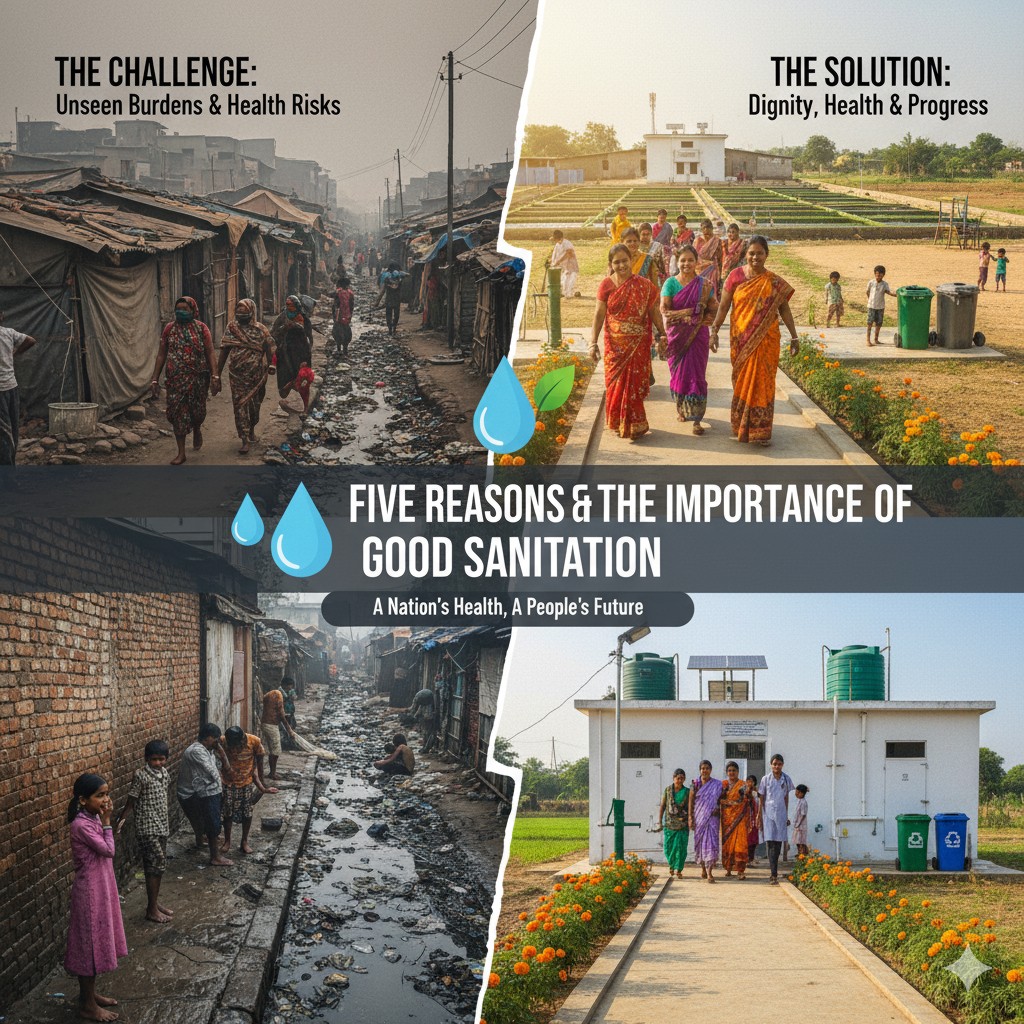
Sanitation is one of the fundamental pillars of public health and human dignity. Despite progress through initiatives like the Swachh Bharat Mission, India continues to face significant sanitation challenges. Poor sanitation impacts not only health but also economic productivity, education, and overall quality of life. The struggle can be traced to several interlinked reasons that hinder effective implementation and sustainability.
1. Population Pressure and Urbanization
India’s massive and rapidly growing population puts immense strain on sanitation infrastructure. Cities like Mumbai, Delhi, and Kolkata face overcrowding, leading to overburdened sewage systems and inadequate waste management. Informal settlements and slums, which often lack basic toilets and drainage, make it difficult to provide universal sanitation coverage. Rapid urbanization outpaces the development of infrastructure, creating an ongoing deficit in sanitation services.
2. Inadequate Infrastructure and Maintenance
While millions of toilets have been constructed, many lack proper water supply, sewage connections, or maintenance mechanisms. Rural areas, in particular, struggle with poor-quality toilets that fall into disuse over time. Even in cities, outdated sewage treatment plants and open drains contribute to environmental pollution and health hazards. Sanitation infrastructure requires not just building facilities but ensuring their sustainability through regular maintenance and modernization.
3. Cultural and Behavioral Barriers
Open defecation has deep cultural and behavioral roots in parts of India. Many people, especially in rural communities, perceive open defecation as natural or even healthier due to misconceptions about cleanliness. Efforts to change these attitudes take time, consistent education, and community engagement. Without addressing behavioral aspects, infrastructure alone cannot solve sanitation challenges.
4. Inequality and Marginalization
Sanitation access is deeply unequal across social and economic groups. Marginalized communities, including those in remote rural areas and urban slums, often face discrimination in access to clean and safe sanitation facilities. Women and girls, in particular, bear the burden of poor sanitation, as lack of private toilets exposes them to harassment, health risks, and school absenteeism. Addressing sanitation inequality requires inclusive planning and equitable resource allocation.
5. Weak Governance and Implementation Gaps
Despite strong policies and programs, poor coordination between central, state, and local governments often leads to inefficiencies. Funds may be allocated but not effectively used due to bureaucratic delays, corruption, or lack of technical expertise. Monitoring and evaluation mechanisms are often weak, reducing accountability and long-term impact.
Importance of Good Sanitation Systems and Infrastructure
Good sanitation is essential for preventing diseases such as cholera, diarrhea, and typhoid, which thrive in unsanitary conditions. It enhances public health, improves school attendance, especially among girls, and boosts economic productivity by reducing healthcare costs and absenteeism. Proper waste management also protects the environment by preventing water and soil contamination. Ultimately, sanitation is a foundation for human dignity and sustainable development.
Investing in robust, inclusive, and well-maintained sanitation systems is not just a matter of infrastructure—it is an investment in people’s health, equality, and the nation’s future.
v

This Post Has 0 Comments